
Empowering Farmers, Transforming Agriculture.
Empowering Farmers, Transforming Agriculture.

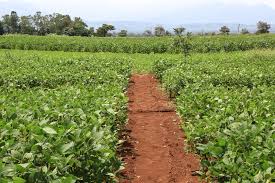
A Ugandan farmer notices that one part of the garden is growing beautifully while another section looks tired.
More fertilizer is applied. The weak crops remain weak.
The seed supplier is blamed. The rain is accused of arriving late. The fertilizer dealer receives a serious phone call. Eventually, even the neighbour’s goats enter the investigation.
Yet the real problem may be hidden inside the soil.
The field could be too acidic. One nutrient may be deficient while another is already sufficient. The soil may contain little organic matter, drain too quickly or hold nutrients poorly. Without testing, the farmer is spending money on guesses.
Soil cannot explain itself during a farm meeting. A good soil test helps it speak through evidence.
Agape Innovations Limited’s official soil-products page lists professional soil testing among its services.
Agape states that its soil analysis can provide information on:
Agape also offers practical guidance based on the farmer’s intended crop, including possible fertilizer selection, acidity correction and improvement of soil structure. Agape Innovations
This is important because receiving laboratory numbers is only the first step. The farmer also needs to understand what those numbers mean for the crop, field and available inputs.
A report that remains folded inside the farmer’s house cannot improve anything except the appearance of the documents shelf.
The following is general agronomic information—not a promise that every soil problem will be identified or corrected through one test.
A laboratory soil analysis helps estimate the soil’s ability to supply nutrients. It can support more informed decisions about fertilizer and liming materials. However, the usefulness of the result depends heavily on collecting a representative sample and interpreting it correctly. FAO’s published soil-sampling guidance emphasizes that laboratory analysis can guide fertilizer and lime selection, while additional FAO guidance notes that correct sampling, validated analysis and proper interpretation are all essential. fao.org
Soil pH influences nutrient availability and biological activity. When soil is too acidic or too alkaline for the intended crop, some nutrients may become less available even when they are present.
A farmer may continue applying fertilizer while the soil condition prevents the crop from using it efficiently.
This does not mean every weak crop has a pH problem. Drought, waterlogging, compaction, pests, disease, unsuitable seed and poor field management can produce similar symptoms.
Testing helps separate evidence from suspicion.
Farmers sometimes purchase fertilizer by copying a neighbour, following a familiar routine or choosing whatever product is available at the agro-input shop.
But fields differ.
One soil may require phosphorus. Another may already contain sufficient phosphorus but need acidity correction or more organic matter. Applying unnecessary nutrients wastes money and may create other agronomic or environmental problems.
A soil test does not promise that fertilizer will become cheap. It helps the farmer avoid making an expensive decision with their eyes closed.
Agricultural lime should be applied according to diagnosed soil conditions and a suitable recommendation.
Soil pH alone may not provide every piece of information required to calculate a lime programme. Soil characteristics, crop requirements and the quality of the liming material also matter.
Agape can use the test results and crop information to guide the farmer on the next step. Customers should request a written recommendation rather than copying another farmer’s application rate.
Two farms can share a boundary without sharing the same soil problem.
Commercial farmers, cooperatives and agricultural projects need more than verbal descriptions such as “the soil looks tired.”
A soil report provides a baseline that can be compared with future results. It can support:
Testing should not become an annual ritual that produces reports nobody reviews. Results should lead to defined actions, records and later reassessment.
The laboratory analyses the soil delivered to it—not the entire farm.
If the sample comes only from the richest corner, beside a manure heap or from a place where fertilizer spilled, the result may not represent the field. A technically accurate laboratory result can still produce a poor recommendation when the original sample was badly collected.
Before sampling, contact Agape for its current instructions. Confirm the required depth, number of collection points, sample quantity, container and labelling procedure for the field and crop.
As general practice, farmers should:
Do not send a handful collected beside the boda-boda stage and announce that it represents fifteen acres. The laboratory is scientific, but it has not yet learned to interrogate the soil about where it came from.
A soil result should be interpreted in relation to the intended crop.
Before requesting the service, provide:
A coffee farmer, soybean grower, vegetable producer and tree nursery may not require identical recommendations from the same laboratory values.
The correct question is not simply, “Is this soil good?”
The better question is, “What does this soil require for the crop I plan to grow?”
Ask Agape to explain the findings in plain language.
The discussion should cover:
Do not begin by purchasing every product mentioned in a soil report. Prioritize the most important constraints, confirm rates from current written guidance and keep application records.
A useful farm record can include:
Field | Sampling date | Intended crop | pH | Main findings | Recommendation | Product and rate | Application date | Person responsible | Review date
The service may be valuable to:
Soil testing is especially important before a major planting or input investment. It is cheaper to identify a serious soil limitation before planting than to explain it after a disappointing harvest.
Every bag of fertilizer, tonne of manure or load of agricultural lime represents money, transport and labour.
Those resources should respond to a diagnosed need.
Agape Soil Testing Services helps farmers move from “I think the soil needs something” to a clearer understanding of soil pH, nutrients, organic matter, texture and other relevant characteristics. The service then connects the findings to the intended crop and practical soil-management decisions.
Contact Agape before collecting the sample. Explain the farm location, field size, intended crop and production history, then request the current sampling procedure, service scope, price, expected reporting time and interpretation process.
Agape Innovations Limited
Call/WhatsApp 0771830747 / 0709717844
Your soil may remain silent, but your input bill will not. Test first, understand the problem and invest where the field genuinely needs help.
