
Empowering Farmers, Transforming Agriculture.
Empowering Farmers, Transforming Agriculture.

Let Agape Soil Testing Tell You What the Field Actually Needs
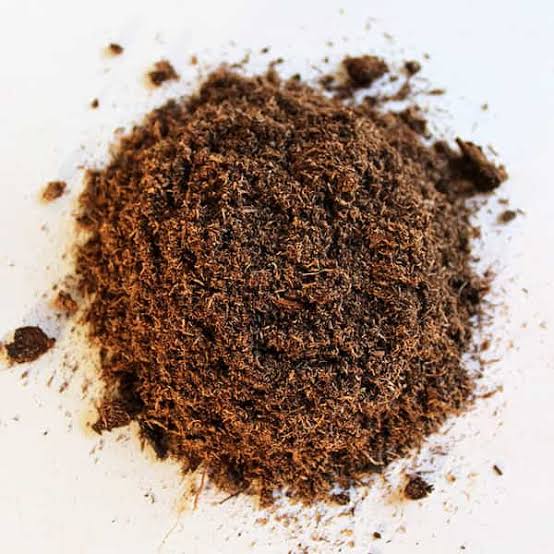
A Ugandan farmer may hear one neighbour recommending agricultural lime, another praising poultry manure and a third insisting that the entire field needs “strong fertilizer.”
By the end of the conversation, the farmer has received five prescriptions from people who have never examined the soil.
Crops cannot explain their problems through WhatsApp voice notes. Soil testing provides a more reliable starting point.
Agape Soil Testing Services help farmers, commercial farms and agricultural programmes understand important properties of their soil before making major input decisions.
Agape’s official website says its detailed soil analysis can report indicators including:
The service also connects results to the customer’s intended crop so that soil-amendment and fertility guidance can reflect the production objective.
The exact tests provided should be confirmed when requesting the service. Not every package or laboratory analysis necessarily includes every possible physical, chemical or biological soil measurement.
Dark soil is not automatically fertile. Red soil is not automatically useless. A vigorous crop in one corner does not prove that the whole farm has identical conditions.
Soil characteristics can vary because of:
Visible crop symptoms can also be misleading. Yellow leaves may be associated with nitrogen shortage, waterlogging, root damage, disease, unsuitable pH or several other problems.
The crop may be giving clues, but it has not yet completed the investigation report.
Soil pH affects nutrient availability and biological processes. A test can indicate whether the soil is excessively acidic, near neutral or alkaline.
This information is especially important before applying agricultural lime. Lime should address a diagnosed acidity problem and should be recommended according to soil conditions, crop needs and product characteristics.
Applying lime without testing can become agricultural gambling—and the soil never agreed to play.
Laboratory analysis can help identify nutrient levels that may influence crop planning. Results should be interpreted alongside the crop, expected production level, soil texture, organic matter and field history.
A low result does not automatically mean that the farmer should apply the largest possible quantity of fertilizer. Recommendations should consider the full soil–crop system.
Organic matter contributes to soil structure, biological activity, nutrient cycling and water-management characteristics. A result can help farmers decide whether greater attention is needed for compost, manure, crop residues, cover crops or other suitable organic-matter practices.
Organic matter is important, but one laboratory number cannot replace observing erosion, compaction, drainage and crop performance in the field.
The proportions of sand, silt and clay influence water movement, nutrient retention, aeration and ease of cultivation.
A sandy soil and a clay-rich soil may therefore require different approaches even when both farms grow the same crop. The fertilizer that worked at your uncle’s farm in Masaka may not behave identically on another field in Soroti.
A large or visibly variable farm may require more than one sample. A wet lower section, an eroded slope and a productive upper field should not automatically be mixed into one sample, because the combined result can hide important differences.
FAO soil-sampling guidance emphasizes collecting multiple subsamples from a defined, relatively uniform area and combining them to obtain a representative sample. FAO soil-sampling guidance
A laboratory can analyse only the soil it receives. If the sample represents one anthill, fertilizer band, compost heap or roadside corner, the report may describe that small spot very accurately—and the rest of the farm very badly.
General good sampling practice includes:
Do not choose the best-looking part of the field because you want the soil to pass the examination. The objective is to learn the truth, not protect the soil’s feelings.
The service may be particularly valuable for:
Testing before establishing a long-term crop can be especially useful because correcting some soil limitations becomes more difficult after an orchard or plantation is already in place.
A good soil report should not remain folded inside an office file while the farmer continues applying inputs by habit.
Use the results to ask practical questions:
FAO’s SoilFER programme illustrates the broader principle: useful soil services connect field sampling and laboratory analysis to decision-support and locally adapted fertility management. FAO SoilFER programme
Recommendations still need sound agronomic interpretation. A soil test is an important diagnostic tool, not a guarantee of yield. Weather, seed quality, pests, diseases, planting time, crop management and market decisions remain important.
A farmer may hesitate to pay for testing yet spend far more on unsuitable fertilizer, unnecessary lime or repeated corrective applications.
Soil testing helps replace speculation with evidence. It can guide better-targeted input decisions, establish a baseline for monitoring and help agricultural projects avoid distributing the same recommendation to every farmer regardless of field conditions.
Contact Agape Innovations Limited for soil-testing arrangements, sampling instructions, available analysis parameters and crop-focused interpretation.
Agape Innovations Limited
Call/WhatsApp: 0771830747 / 0709717844
Your soil already knows what is wrong. Soil testing simply helps it stop keeping secrets.
